
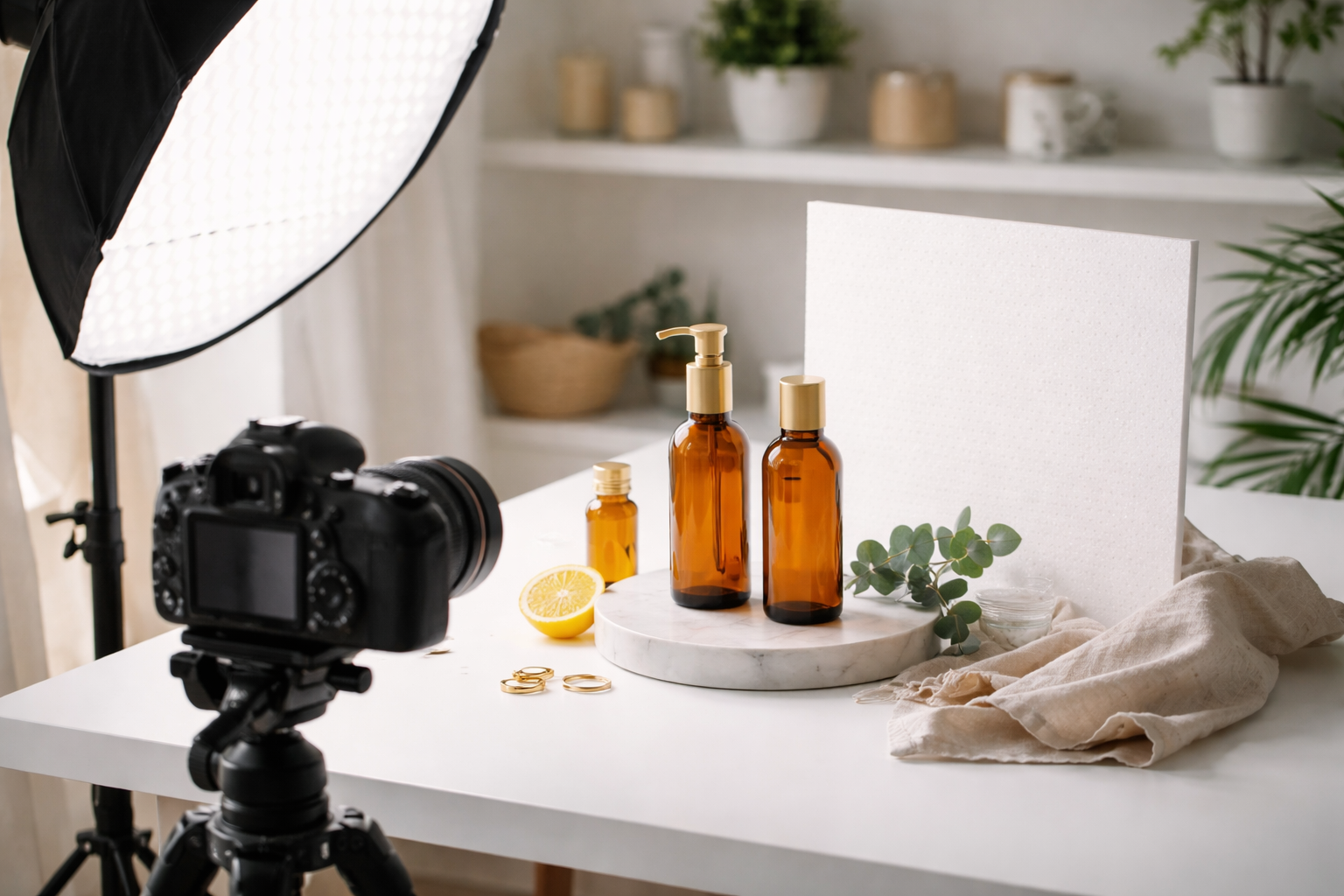
6 Simple Lighting Changes That Instantly Improve Product Shots
If you have ever looked at your product photos and thought, “Why do these look flat or dull compared to what I see online?” you are not alone. Most product photography enthusiasts struggle with lighting, not because they lack talent, but because lighting is often misunderstood.
At EtherArts Product Photography & Graphics, we have worked with countless creatives and brands who believed they needed expensive gear to get better results. In reality, small lighting changes often create the biggest improvement.
Lighting controls how your product feels, how premium it looks, and how clearly it communicates value. Whether you shoot for fun, for ecommerce, or to build a portfolio, mastering a few simple lighting adjustments can completely transform your images.
In this guide, we will break down six easy lighting changes you can apply today to instantly improve your product shots without expensive equipment or complex setups.
Why Lighting Matters More Than Camera Gear
Before jumping into the tips, it helps to understand why lighting matters so much in product photography.
Lighting affects:
- Texture and surface detail
- Color accuracy
- Mood and emotion
- Perceived quality and price
- Trust for ecommerce shoppers
Even the most expensive camera cannot fix poor lighting. On the other hand, thoughtful lighting can elevate photos taken with a basic setup. This is especially important for low cost product photography and ecommerce product photography services where efficiency and consistency matter.
1. Move Your Light Source Closer to the Product
One of the simplest yet most powerful lighting changes is distance.
When your light is too far away, it creates harsh shadows and flat highlights. Moving the light closer softens shadows and wraps light more naturally around the product.
Why this works
- Closer light creates a softer transition between light and shadow
- Texture becomes more visible without looking harsh
- Products look more three dimensional
How to apply it
- If using a softbox, move it closer to the product rather than increasing power
- For window light, place the product closer to the window instead of boosting exposure
- Use reflectors to control shadow depth instead of adding more lights
This single change alone can dramatically improve product shots, especially for beginners.
2. Use One Main Light Instead of Multiple Lights
Many enthusiasts think more lights equal better results. In reality, too many lights often kill depth and shape.
A single main light helps you understand how light interacts with your product and creates intentional shadows.
Benefits of one light setups
- Cleaner and more professional look
- Better control over highlights and shadows
- Faster setup and easier consistency
Practical example
If you are shooting a skincare bottle, place one soft light at a 45 degree angle from the front. Let the shadow side fall naturally and use a white card to gently lift shadows if needed.
This approach is commonly used in ecommerce product photography services because it produces consistent and scalable results.
3. Change the Angle of Your Light, Not Just Its Brightness
Brightness is often over adjusted while angle is ignored.
Even a small change in light angle can completely change how your product looks.
What to look for
- Front lighting reduces texture and makes products look flat
- Side lighting reveals texture and form
- Back lighting helps separate products from the background
How to experiment
- Rotate your light around the product in small increments
- Take test shots at each angle
- Compare how labels, textures, and reflections change
For reflective products like glass or metal, angle matters more than intensity. This is a key technique used in low cost product photography to achieve premium results without complex setups.
4. Add a Simple Diffuser to Soften Harsh Light
Harsh light is one of the fastest ways to make a product look cheap.
Diffusion spreads light evenly and reduces strong highlights.
Easy diffusion options
- White curtain or sheer fabric over a window
- Baking paper clipped in front of a light source
- A DIY softbox made from a cardboard box and white paper
When diffusion helps most
- Glossy packaging
- Reflective surfaces
- Beauty and cosmetic products
- Food photography
Diffused light makes products look smoother, cleaner, and more professional, which is essential for ecommerce listings.
5. Control Shadows With Reflectors Instead of More Lights
Shadows are not the enemy. Uncontrolled shadows are.
Instead of adding more lights to fill shadows, use reflectors to bounce light back onto the product.
Common reflector options
- White foam board
- Silver reflectors for brighter fill
- Even a white wall or tabletop
Why reflectors are better
- Maintain natural contrast
- Avoid flat lighting
- Save time and budget
Place the reflector opposite your main light and adjust distance to control shadow depth. This technique is widely used by professionals offering ecommerce product photography services because it delivers clean results efficiently.
6. Match Your Lighting Style to the Product’s Purpose
Not every product needs the same lighting style.
A common mistake is using the same setup for everything.
Examples
- Jewelry benefits from controlled highlights and dark backgrounds
- Lifestyle products look better with soft natural light
- Tech products often need clean directional lighting for shape
Ask yourself
- Is this product meant to feel luxury or everyday
- Is texture important or should it look smooth
- Will this image be used for ecommerce, ads, or social media
Matching lighting to purpose is what separates casual photos from professional product shots.
Real World Case Example
One of our clients at EtherArts Product Photography & Graphics struggled with dull product images despite having a decent camera.
We made just three changes:
- Moved the light closer
- Reduced lighting to one main source
- Added a simple reflector
The result was sharper textures, better color, and a noticeable increase in engagement on their ecommerce store.
No new equipment was purchased. Only smarter lighting decisions.
Lighting Tips for Consistent Results
To maintain consistency across shoots, especially for ecommerce catalogs, keep these habits:
- Document your light placement with photos
- Use the same time of day for window light
- Mark distances between product and light
- Keep background and surface consistent
Consistency builds trust and is a core requirement for scalable ecommerce product photography services.
Common Lighting Mistakes to Avoid
Even experienced enthusiasts fall into these traps:
- Over lighting the product
- Ignoring reflections
- Mixing different color temperatures
- Relying on auto settings without testing
Fixing these mistakes often improves images more than buying new gear.
Final Thoughts
Great product photography is not about complicated setups or expensive lights. It is about understanding how light behaves and making small intentional changes.
By applying these six simple lighting adjustments, you can:
- Improve clarity and texture
- Create more professional looking images
- Save time and money
- Build confidence in your product photography skills
If you are serious about improving your results or need guidance for low cost product photography or professional ecommerce product photography services, EtherArts Product Photography & Graphics is here to help.
Start experimenting today. Your next great product shot is one lighting change away.
FAQs
What is the best lighting for beginner product photography?
Soft natural light from a window combined with a reflector is one of the easiest and most effective setups for beginners.
Do I need expensive lights for professional product photos?
No. Many professional results come from simple lighting setups with proper positioning and diffusion.
Why do my product photos look flat?
Flat images usually result from front lighting or too many lights. Try side lighting and controlled shadows.
Is lighting more important than editing?
Yes. Good lighting reduces the need for heavy editing and produces more natural and trustworthy product images.
Can these lighting tips work for ecommerce photography?
Absolutely. These techniques are widely used in ecommerce product photography because they are efficient, scalable, and consistent.